AI music tools and music distribution
A no-nonsense guide to understanding AI tools in music production and how they affect music releasing and distribution.
Changing music culture
AI music tools are more common than ever, offering artists countless ways to streamline their workflows, get inspired, and experiment. They’re also changing the relationships between artists, platforms, and listeners. If AI tools are a part of your approach to music production, it’s essential to keep this in mind.
So, how does AI affect music distribution and your ability to self-release your music?
AI and human creativity
While AI music production tools can empower human creativity, they can also have a negative impact on the experience of music if used in the wrong ways.
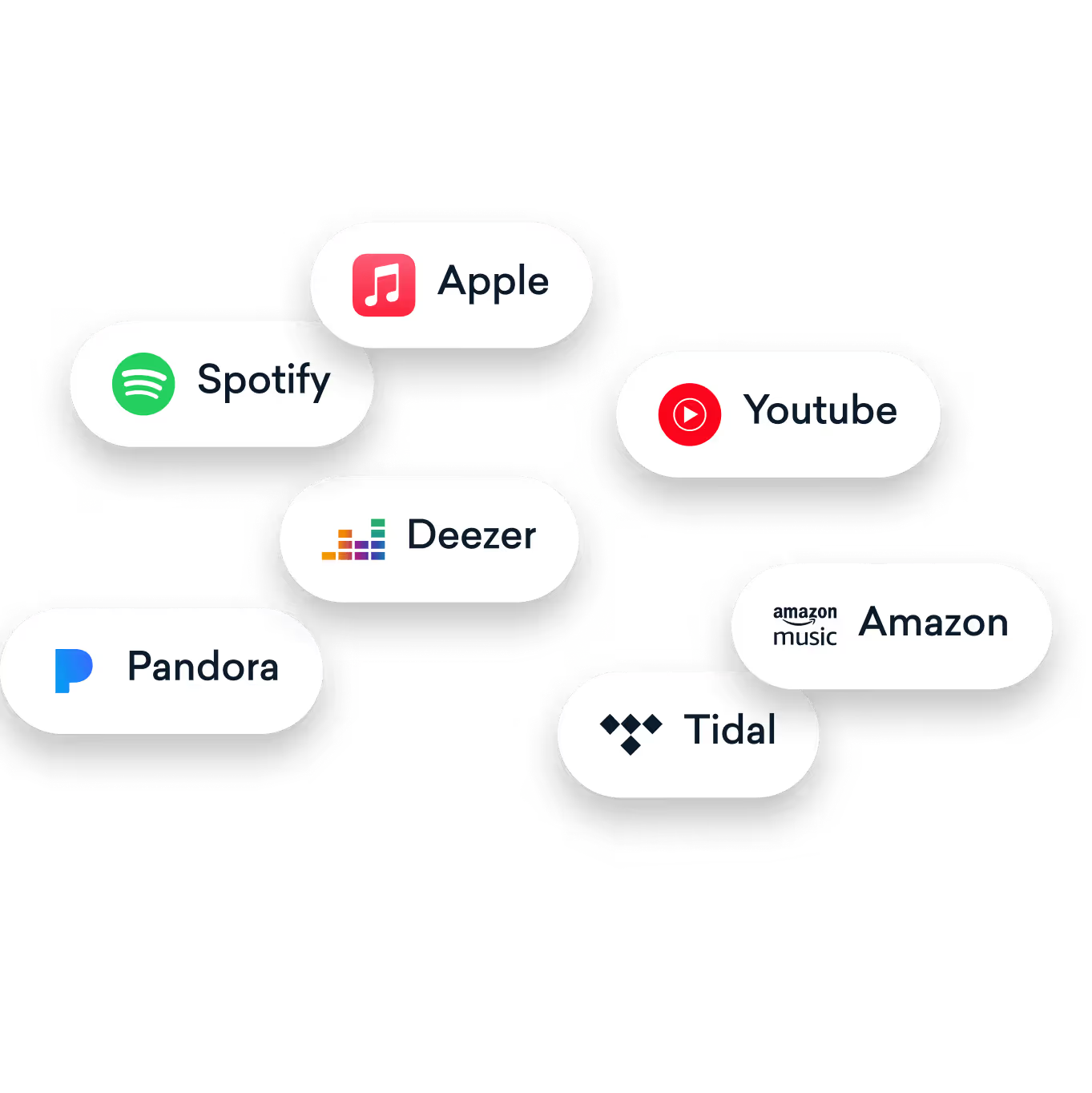
The most common example of this is the creation of bulk quantities of fully AI-generated tracks for stream farming on platforms like Spotify and Apple Music.
Because of this and other cases, platforms are adopting policies so that human creativity and original music are not overshadowed or displaced by AI-generated music.

Where’s the line?
There are many types of AI music production tools out there, and different producers will use them in all kinds of different ways. So, how do you know whether or not your music that uses AI tools will satisfy platform policies?
A lot of this has to do with what kind of tool you use and how you use it. Let’s take a closer look.

LANDR’s stance on AI and music distribution
At LANDR, we believe innovation should serve artists, not replace them. AI tools can be powerful sources of inspiration and creative support, and we’re proud to be part of this progress as a leader in AI-assisted music production. But as fully AI-generated music becomes more common, we believe it’s important to help preserve the value of human creativity in the music ecosystem.
That’s why we support the reasonable and responsible use of AI in music, but we also reserve the right not to distribute, or even to ban, any music or artist that relies entirely on AI audio generation to create. We recognize that every artist uses technology differently, so we apply this policy with care and on a case-by-case basis where necessary. As always, we stand behind human originality and creativity and we value all the hard work you put into your music.
You can learn more about our policy here.
The many types of AI music tools
AI audio generators
AI audio generators create fully produced audio tracks and stems using generative AI models. These tools can produce vocals, instruments, soundscapes, and even complete songs from a text prompt or musical input. They're ideal for quickly prototyping ideas, generating sound elements, or inspiring new compositions.
AI MIDI generators
AI MIDI tools generate musical patterns, chord progressions, and melodies in the form of MIDI data. These are often used in digital audio workstations (DAWs) for further editing, arranging, or layering. Some also offer real-time generation or adaptive sequencing based on user input or mood.
AI stem splitters
AI stem separation tools isolate individual elements (like vocals, drums, bass, or other instruments) from a mixed audio file. These are particularly useful for remixes, mashups, and live practicing, allowing producers to manipulate or analyze specific parts of a song.
Other generative AI tools
Beyond audio and MIDI, other AI music tools offer advanced functionality such as mastering, lyric generation, intelligent audio effects, sample recommendation, and preset generators. These tools complement traditional workflows and can significantly accelerate the creative process.
Best practices when using AI for your music
1. Keep track of the tools you use and how you use them
You don’t need to document every detail, but it can be helpful to note which AI tools are involved in your projects and how they’re used, such as for generating lyrics, producing stems, or mastering.
Even a brief note in your project folder can provide clarity in case questions come up later on. This can also be great for helping you better understand your own creative workflow.
2. Be aware of copyright and ownership
AI tools that isolate stems or mimic artist voices can raise legal and ethical questions, especially when working with copyrighted material or recognizable vocal styles.
Before trying to release tracks that use AI-separated audio from copyrighted music or that feature soundalike elements, make sure you have the rights to do so. Going forward without proper clearance could lead to takedowns or disputes.
3. Know the policies of distributors and music platforms
Some distributors and DSPs (like Spotify or Apple Music) may implement rules around AI, especially regarding bulk quantities of AI-generated songs, music quality or originality, and cloned artists.
Check whether your distributor allows AI-assisted music and if they require any disclosure. Platforms might also remove content that violates their originality or impersonation policies.
4. Don’t forget policies on AI image generators
If your artwork was created using AI tools like Midjourney or DALL·E, check both the platform’s license and your distributor’s artwork guidelines.
Some platforms prohibit AI-generated art without proper labeling, while others ban it altogether. Use only licensed sources or combine AI with manual edits to stay compliant.
5. Balance your use of AI with your originality and creativity
AI can be a powerful collaborator, but it shouldn’t fully replace your unique voice and style. Use it to enhance your music, not to automate it entirely.
Fans and platforms alike respond to originality. Keeping a human touch helps your work stand out and shows that you’re not a prompt engineer but a dedicated and inspired musician.
6. Stay informed as everything evolves
AI policies in music are still in flux, and new regulations, court cases, and guidelines are appearing all the time. What’s allowed today may not be tomorrow.
Follow updates from music rights organizations, AI platforms, and your distributor. Staying informed helps you adapt quickly and keep your releases risk-free.
FAQ: AI tools and music distribution
Can I release music that was made using AI tools?
Do I need to credit AI tools in my music release?
Is it legal to use AI to clone another artist’s voice?
Can I distribute AI-generated cover art on streaming platforms?
What are the risks of using AI stem splitters on copyrighted songs?
Distribute with LANDR
Share your music with the world through LANDR's global distribution network of over 150 platforms.